Pleasantly uncomfortable feelings
Exploring the twin popularity of liminal spaces and "loneliness influencers"

During the pandemic, images circulated of empty public spaces across the world.
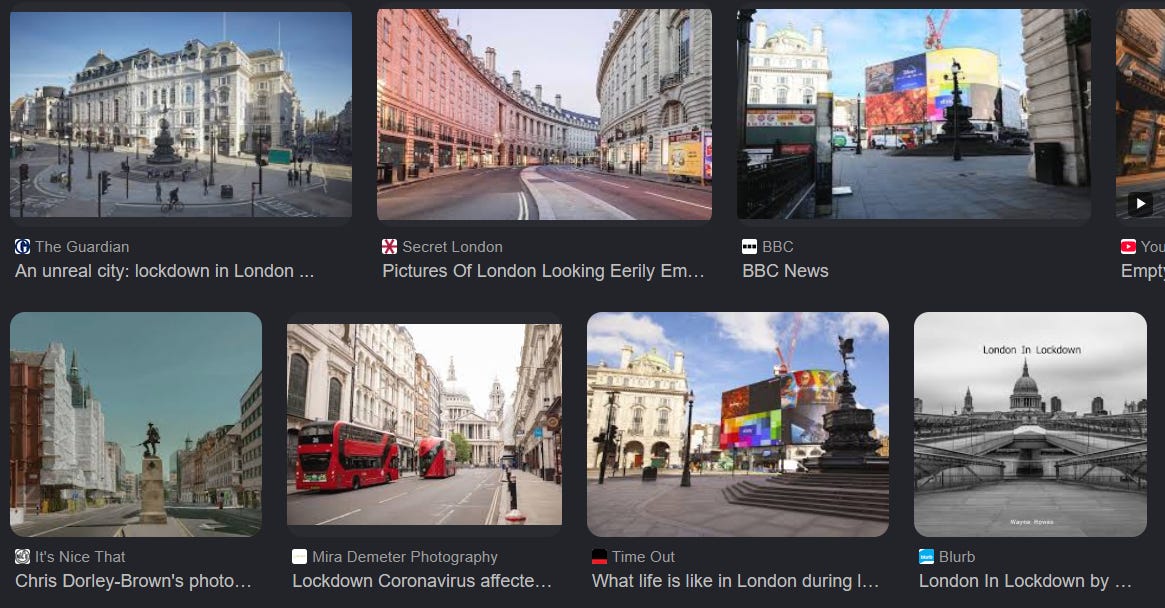
Central London in particular reminded many people of the iconic opening scenes of 28 Days Later, when Cillian Murphy wanders around the West End as Godspeed You! Black Emperor play moodily over the top.
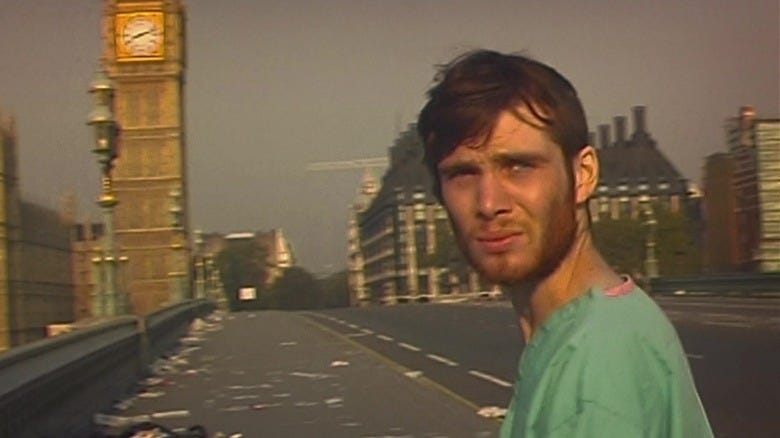
And although these were some of the darkest moments of the pandemic, I still couldn’t help but counterintuitively think that it would be quite fun to explore that completely empty version of my hometown.
There’s something about the eerieness, the unexpectedness of experiencing a space in a state that’s the polar opposite of what it was designed for.
It completely changes your view of the situation. Images of such emptiness are transformed thanks to the absence of people. You notice different details and reassess those images in completely different ways.
We tend to describe such spaces, and the accompanying images, as “liminal”. They’re so named after the definition of liminal as “relating to, or being in an intermediate state, phase or condition”.
If you’ve ever been in the office on a weekend, you’ll know the kind of vibe I’m describing here. Everything is familiar, but also not quite right. The whole space is waiting for people to bring it to life. While it waits, it’s in an in-between, liminal state.
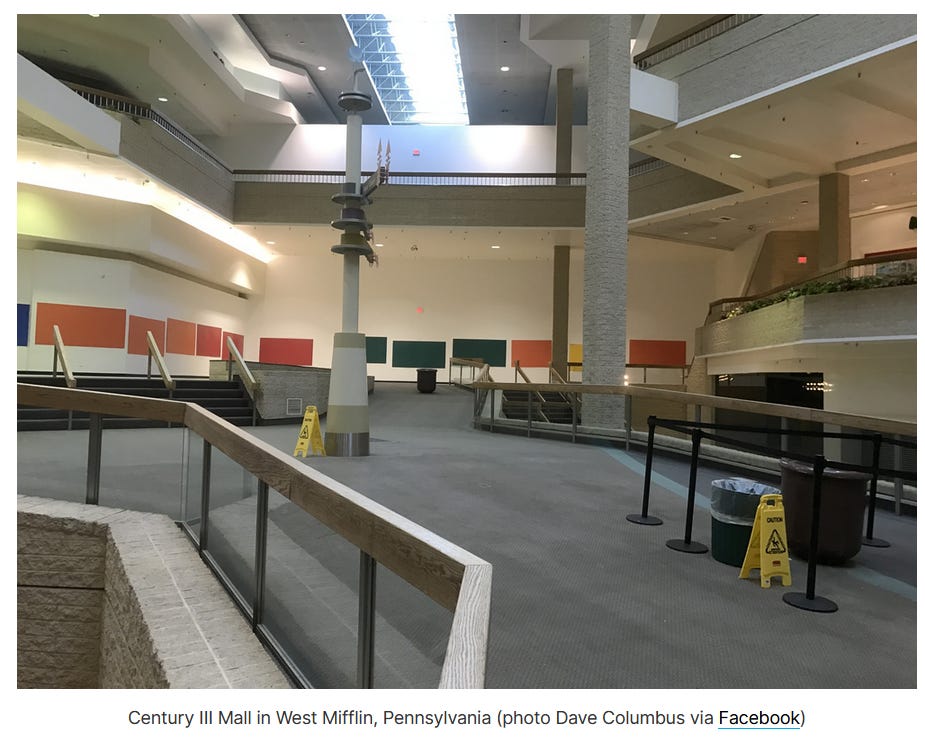
The idea of “liminalism” (as described by Ed Simon in this space in Hyperallergic) is front of mind at the moment thanks to the new A24 horror movie “Backrooms”. I’ve not seen the film, but I do know it was a) directed by a YouTuber and b) it’s based on a 4chan collaborative short story that stemmed from an image of an empty room, which users imagined as a spooky liminal space.
To Simon, the popularity of liminalism and photography of liminal spaces speaks to where we are as a society. It’s:
“The visual accompaniment to neoliberalism, post-industrialization, early apocalypse, whatever you want to call it, as silent and dark as an abandoned shopping mall.”
The other factor Simon pulls out of the popularity of liminal photography is the complete lack of humans on show. Unlike 28 Days Later, where we experience London’s emptiness through Cillian Murphy’s experience, liminal photography focuses on the details we can see thanks to the complete lack of humans on show.
It’s an “intentionally alienating experience - a personal loneliness that’s borderline apocalyptic” (to further deepen those 28 Days Later/COVID-era comparisons). Perhaps the popularity of liminalism comes as much from these depictions of loneliness as it does from its reflection on our perilous socio-economic-political status as a society.
Loneliness is back on the media agenda, as the past few weeks have seen the rise of “loneliness influencers” in our feeds and across media publications.
The creators in question (there don’t seem to be that many - both The Cut and The Atlantic featured Lana Isa heavily) “give followers a peek into mundane solo moments” (as per The Atlantic).
They celebrate and glamorise spending time alone, taking the kind of activity that may previously have been the butt of the joke (think Dinner Date delivering a microwave meal to those not chosen) and reframing it positively.
“It’s only embarrassing if you’re embarrassed”, as one of the video taglines says.
As someone who isn’t afraid of eating out or going to the cinema alone (unless you count a book as company), I can empathise with this line of thinking. But there’s an obvious duality at play here with solitude influencers: they’re documenting their solitude precisely for others to enjoy.
And while Lana Isa may point out that she turns off notifications, she’s still getting significant feedback and engagement in the comments on her videos. The solitude comes across as genuine, but sharing your experience significantly changes the dynamic from the other forms of social isolation people experience.
Atlantic author Faith Hill highlights a further duality in the comments on influencers’ posts about loneliness. There are those who are “on a ‘journey of being alone’, who appreciate Isa’s guidance and validation”. And there are also those who “pine for more solitude than they’re getting”, who see a life of solitude as a form of escapism: starring in your own version of 28 Days Later, with the infected threatening to turn you into a monster.
That desire is something I can honestly identify with. On a standard weekday, you feel as though there aren’t enough hours to get things done. Not enough time for work. Not enough time to be an active, present parent. Not enough time to relax. Not enough time for hobbies and interests (although there’s often crossover here with relaxation). You spend your time wishing you had more time.
But there’s a counterintuitive duality at play here. When I do have free time to myself, which I had tranches of last week, I find inertia takes hold of me, and I end up doing not very much at all. The concerns of “there’s not enough time!” disappear from view as I agonise about what to watch on TV and what to play on guitar, before inevitably doing nothing with the extra free time.
It seems to me that the possibility of solitude, of endless spare time, of creative freedom is much more appealing than the reality of it. Which would explain the appeal of the “loneliness influencer”: we love the idea of that life; but the thousands of people watching, liking and commenting aren’t planning to go solo. They’re in love with the possibility of the idea.
To me, that’s also what’s so appealing and entrancing about liminal spaces and the images that define liminalism. It’s less about loneliness, and more about possibility. Being like Cillian Murphy in 28 Days Later affords you the chance to view some of the capital’s most recognisable locations and landmarks through a completely different lens, to appreciate them through a different lens.
Alexi Gunner, in an issue of his excellent idle gaze, explored this idea in a 2021 issue on liminal spaces. He looked at liminal spaces through the lens of Lost In Translation (still a great film, and what a soundtrack by the way).
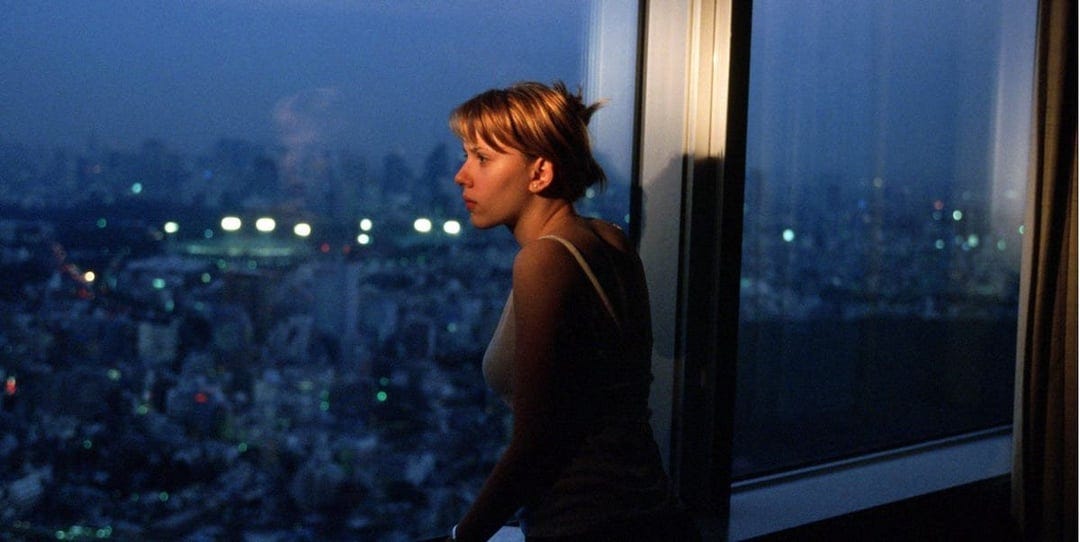
Bob and Charlotte are lost and lonely in Tokyo, but in connecting with each other and the liminal spaces around them, they open up new experiences and explore their surroundings in a different light.
That’s why for Gunner, liminal spaces are not doom-laden, but full of creative possibilities:
“There seems to be something in the solitude and moments of introspection found in places of transition, in waiting, and not knowing, which open us up for momentary, but profound interactions. These liminal spaces allow us to become emotional tourists, letting alien sensations take hold of us for a second, safe in the knowledge we are only passing through.”
Moments in such spaces, just like moments of solitude and loneliness we experience, are an opportunity to break from our routine, allowing us to see ourselves, our ideas and our problems in a different light. We’re not completely breaking up with our routines and the rush of day-to-day life; we’re deliberately stepping outside the maelstrom to discover an alternative perspective.
And I think there’s something in that those of us working in comms can take inspiration from when we feel stuck in a rut. That could be a creative rut, or even a relationship rut with a client, agency, or project that could do with some fresh impetus and a minor reset.
Take a step outside the day-to-day and visit somewhere else to break out of your bubble.
Use my former colleague Nick Hearne’s trick of taking a walk in the opposite direction or to a spot you don’t normally visit.
It’ll be harder to find a liminal space without booking some kind of experience, but you could try visiting the supermarket early in the morning or late at night, or travelling outside rush hour.
If you’re struggling with a listless relationship, run a planning session or workshop somewhere unfamiliar to you all.
Bring in some new voices.
Encourage some quiet-storming (generating ideas on your own in silence) to encourage different voices to share their ideas.
Anything you can do to freshen things up and capture some of those pleasantly uncomfortable feelings will go a long way to providing a jolt of freshness into a situation. You’ll rarely need to go to the extremes of 28 Days Later and shut down Piccadilly Circus - even some minor jolts can hit hard in all the right places.